
Ground-Level Outdoor Space That Stays Flat
Patios in Charlotte for homeowners dealing with uneven yards or needing stable outdoor surfaces for furniture and foot traffic
3 kam construction and remodeling builds custom patios that create level, stable surfaces where your yard slopes, drains poorly, or doesn't offer usable space near the house. You get a patio laid on compacted base material that won't settle or shift when chairs are dragged across it or water runs off the roof. Whether you're replacing a cracked slab, extending your back door access, or adding a dining area away from the house, the patio is graded and edged to stay in place through freeze-thaw cycles and heavy rain.
Patio construction in Charlotte includes options for poured concrete, interlocking pavers, and natural stone, each chosen based on your yard's drainage, soil type, and how the surface will be used. Concrete patios are finished with broom texture or stamped patterns and control joints to prevent random cracking. Paver patios are set on leveled sand or gravel base with edge restraint to keep borders tight, and joints are filled with polymeric sand that resists washout. The layout accounts for downspouts, grade changes, and existing landscape features so water moves away from the house and the patio ties into walkways or decks without awkward transitions.
If you're ready to add functional outdoor space that handles daily use and weather, contact 3 kam construction and remodeling to start your patio project and review material and layout options.
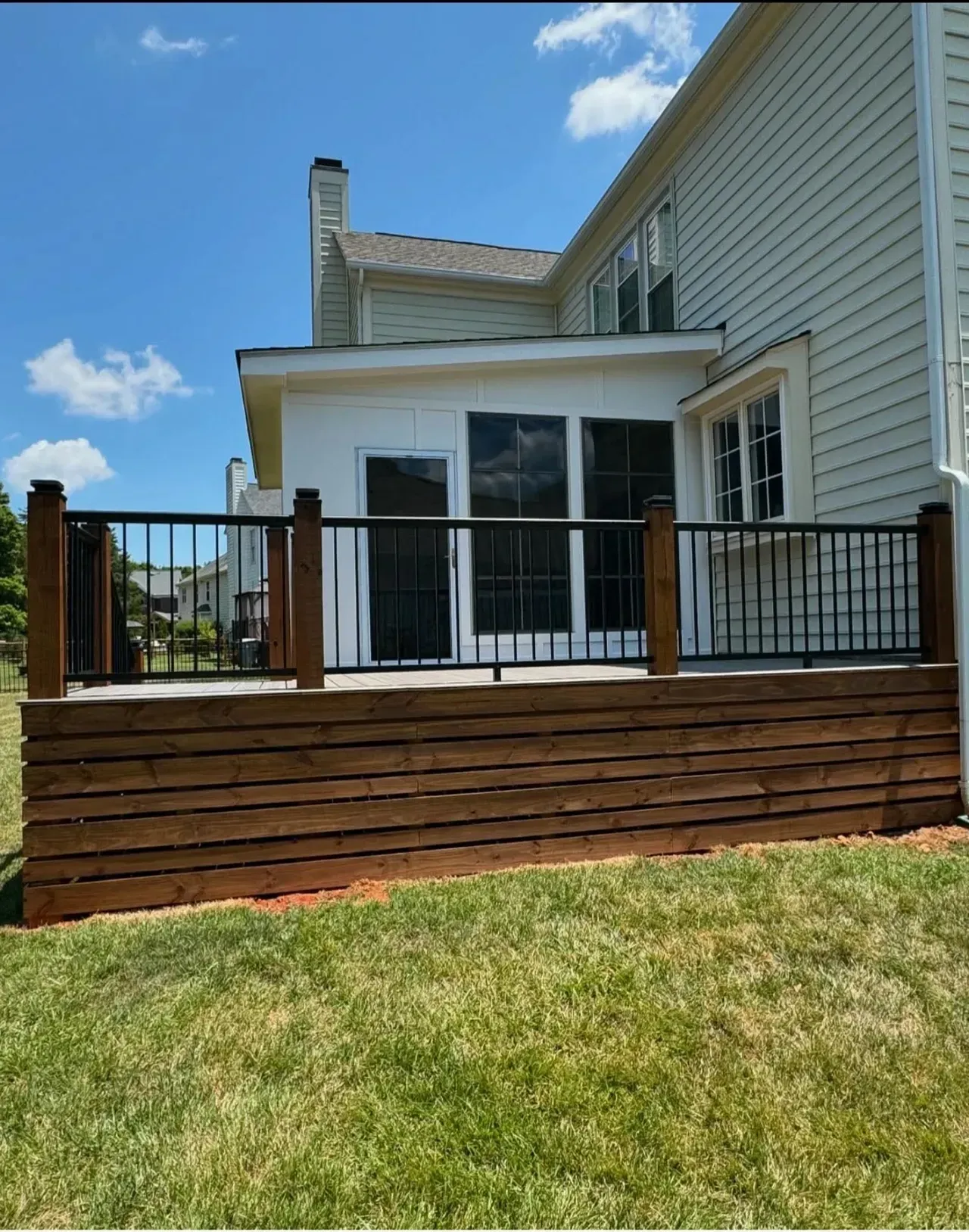
How the Base Gets Prepared and Surface Installed
Your patio begins with excavation to remove sod, roots, and loose soil down to a depth that allows for base material and the finished surface. The subgrade is compacted, and a layer of crushed stone or gravel is spread and tamped in lifts to create a stable foundation that drains and resists settling. For paver patios, a layer of leveling sand is screeded flat before pavers are laid in your chosen pattern and cut to fit edges and curves. For concrete patios, forms are set to the finished height, and rebar or wire mesh is placed before the pour.
After the patio is finished, you'll notice that the surface is level when you set a table on it, water sheets off toward the yard instead of pooling, and the edges stay flush with the lawn or adjoining hardscape. Pavers don't rock underfoot, and concrete doesn't crack along random lines during the first season. The patio remains usable after rain without standing water or soft spots, and furniture legs don't sink into the surface when weight is applied.
Patio installation includes excavation, base preparation, material placement, and edge finishing. It does not include removal of structures, rerouting of irrigation or utilities, or construction of retaining walls. If your project includes an outdoor kitchen, fire feature, or seating wall, those are built on the same base but require additional material and layout planning.
Common Questions About Patio Construction
Homeowners across Charlotte often ask about material differences, site preparation, and how patios connect to other outdoor features.
What is the difference between concrete and pavers?
Concrete is poured as a single surface and finished in place, while pavers are individual units that can be replaced if damaged and allow for more pattern and color variation.
How deep does the base need to be?
Base depth typically ranges from four to six inches depending on soil type and expected load, with deeper bases used where clay soils are prone to movement or where heavy furniture will sit.
When is a patio ready to use?
Concrete patios cure for at least three days before light foot traffic and seven days before furniture, while paver patios can be walked on as soon as the surface is compacted and joints are filled.
Why does the patio need to slope?
A slight slope away from the house, usually one-quarter inch per foot, keeps rainwater from pooling or running back toward the foundation.
What happens if tree roots are in the way?
Roots are cut and removed during excavation, and the base is compacted thoroughly to prevent voids that could cause settling as roots decay.
If you need a patio that works with your yard's slope and drainage and holds up to regular use, 3 kam construction and remodeling can assess your site and walk through material choices and layout. Get in touch to begin planning a patio that fits how you use your outdoor space.